LAW Executive Director Addresses the European Parliament on Sexual Violence
LAW Executive Director Addresses the European Parliament on Sexual Violence
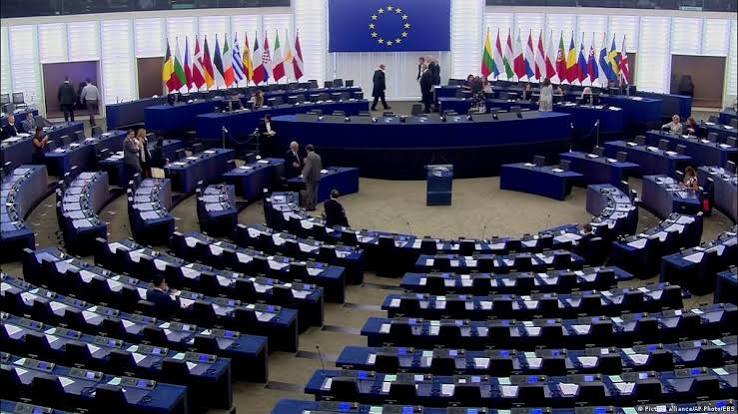
European Parliament | Subcommittee on Human Rights (DROI)
Public hearing “Addressing human rights in the Horn of Africa with a focus on gender-based violence”
Remarks by Antonia Mulvey, Founder & Executive Director, Legal Action Worldwide
04.11.2026
Good afternoon and thank you for the invitation to brief you today –I thank the speakers in advance of me and particularly the survivor – their information is chilling. The sexual and gender based violence crimes that have, and continue to take place, in this region should profoundly shock us. Crimes include widespread and systematic gang rape, sexual slavery, sexual torture, forced marriage, forced pregnancy, and the horrific mutilation of reproductive organs. Victims include children as young as 7 years old and women as old as 75 years.
These crimes constitute war crimes, crimes against humanity, and in the situation of El Fasher, Darfur amount to genocide.
I will be focusing on justice and accountability for these crimes.
The organisation that I direct — Legal Action Worldwide — is a frontline, women-led legal organisation which interviews and represents hundreds of survivors and victims of SGBV across the region, but also globally.
Let me start with Sudan – survivors are desperate to share what has happened and they need immediate assistance. This is why, in Adré, on the Chad-Sudan border, we operate a women’s center, which has provided medical, psychosocial, and legal support to more than 1,500 women and girls and we are expanding our services within Sudan, with the support of the EU. Beyond immediate care, many survivors plead with us to assist them in obtaining justice for themselves and their loved ones – both reparative and punitive justice.
An ongoing survey that we are undertaking of more than 1,000 Sudanese IDPs and refugees across the region confirms this. Those surveyed state that reparative justice means rebuilding their lives and their highest demands are for the return of their land, homes and provision of medical care. Over 95% state that accountability for conflict violations matters, over 70% prioritize investigation, prosecution, and punishment of perpetrators; and over 94% stated survivors must be involved. Our final findings will be ready in December 2026.
But building a case does not happen in a day: it first takes a survivor to be brave enough to come forward. It takes lawyers to act, prosecutors and judges to investigate, courts to rule, and finally, governments to enforce their obligations. If one part of that chain breaks, justice remains only a promise.
Today, almost every part of that chain is broken. First, domestically. In July, in Port Sudan, 16 Rapid Support Force individuals have been found guilty of war crimes, crimes against humanity, and genocide. On first glance this may appear a step forward, but these trials, come from a court in army-controlled territory, are considered one-sided justice, and meted out the death penalty to perpetrators absent from the court. Nevertheless, we need to watch these proceedings.
Internationally, the ICC continues to investigate crimes under its jurisdiction in Darfur – but to date has not made public any requests for arrest warrants concerning the current conflict. In 2025 the ICC delivered its first conviction against a former Janjaweed leader – the Janjaweed are the precursor to the RSF. However, this was two decades after the crimes took place. We represent more than 20 Darfuri women before the ICC — all sexual violence survivors from the current conflict — who cannot wait 20 years before the horrors they endured are recognised and acknowledged by the ICC.
Recognizing the gap in the justice system – on the 9th of June 2026, we filed the first-ever war crimes and crimes against humanity complaint in Kenya with the Director of Public Prosecutions using the principle of universal jurisdiction, on behalf of 12 Sudanese survivors who were sexually enslaved, raped, and tortured in detention in and around facilities in Khartoum since 2023. The complaint identifies ten members of the Rapid Support Forces, including at least 3 individuals with ties to Kenya, some of whom have Kenyan nationality.
The complaint has been formally received by the Director of Public Prosecutions and we have requested them to open an investigation and prosecute those responsible without further delay. Kenya has the legal framework to act; it has just created an International and Organised crimes division, and as a neighboring country to which some of the perpetrators travel in and out freely, Kenya has a responsibility to act and ensure that it is not a safe haven for war criminals.
Turning to Tigray, the long wait for justice is painfully familiar. Domestically, Ethiopia adopted a transitional justice policy, however this is vastly inadequate with no steps taken for domestic prosecutions. Internationally, Ethiopia is not a party to the ICC and therefore there is no jurisdiction.
That leaves the African regional system to hold Ethiopia to account. And in February 2022, we and our partners filed a case before the African Commission on Human and Peoples’ Rights arguing breaches of the African Charter and requested urgent provisional measures against Ethiopia —to stop the extra-judicial killing, sexual violence, destruction of land and property, and to allow humanitarian aid and access. The African Commission unanimously agreed with us and ordered all four of these provisional measures against Ethiopia and ordered compliance within 14 days. On the 14th day Ethiopia signed the Pretoria peace agreement. I faced Ethiopia at the court last year and we expect a full merits hearing next year. This is the only case to date that holds the state of Ethiopia to account for what happened in Tigray and continues to take place.
I would like to turn to Somalia which is far less discussed but does deserve our attention.
Legislation to criminalize rape is now taking place — Somalia’s House of the People passed the Rape and Indecency Offences Bill and the next stage is passage at the Upper House and then presidential assent. There are many positive aspects of this Bill, however we must take action to ensure that the Bill does not allow that children can “legally’ consent to sex as a young as 12 years old, which we understand is being considered.
Turning finally to South Sudan– conflict related sexual violence continues to be horrific and women and girls want and need justice. In October 2024 – we filed the first ever war crimes case against the South Sudan military on behalf of 3 women and girls who were gang raped in Juba, South Sudan.
In March this year, the Public Prosecutions department finally opened our case for investigation. South Sudan has this opportunity to take landmark action and prosecute these crimes – we should support them.
I thank the EU for all its support for justice and accountability. My full recommendations will be presented during the Q&A.