
Accountability for Aid Workers
Accountability for Aid Workers
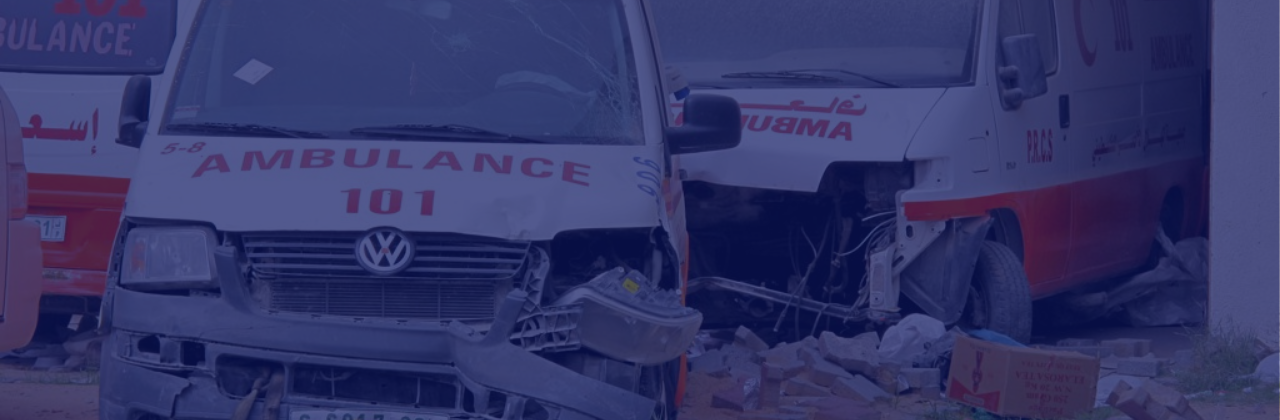
Attacks against aid workers have quadrupled over the past decade, reaching a shocking all-time high of 390 aid workers killed in 2024 and 350 in 2025. In the same year, 280 aid workers were arrested or detained, a 271% increase from 2024. These violations continue despite the protections afforded to humanitarian personnel under international law, UN Security Council Resolution 2730, and the 2025 Declaration for the Protection of Humanitarian Personnel, with near-total impunity.
Very few perpetrators are being held accountable and there are virtually no prosecutions. Very few aid workers receive legal advice about the range of options to pursue justice and accountability. Just a few organisations are equipped to support their staff to pursue legal action, which is often viewed as too challenging and unlikely to succeed.
What do we do?
Protection of civilians including aid workers depends on closing the gap between legal obligations and enforcement. Every serious attack on an aid worker, whether national or international, should trigger a consistent response: condemnation, preservation of evidence, access to legal support, representation for survivors and victims’ families, and a credible, well-resourced pathway to investigation and accountability.
LAW offers free legal support to humanitarian workers, their families, and their organisations when they are targeted, arbitrarily detained, killed, threatened, preventing them from providing vital aid to civilian populations.
LAW’s Protection of humanitarian personnel programme, started in 2022, seeks to:
- Increase legal services to humanitarian personnel who have been targeted, including referral for psychosocial and medical support
- Facilitate investigations and accountability processes through the creation of a lawyers for aid workers network,
- Ensure that survivors and victims’ voices are amplified and that they meaningfully participate in discussions with Member States and humanitarian actors.
LAW is part of the Protect Aid Workers Initiative (PAW), a consortium of INGOs established in 2023 and supported by the European Union (EU) Directorate-General for European Civil Protection and Humanitarian Aid Operations (ECHO). PAW provides practical and financial support that enables national staff and their families to better process and recover after incidents, when national humanitarian personnel are affected by violence or arrest due to their work. This includes legal assistance, provided by LAW.
Since 2025, LAW is an implementing partner of the fourth key area, “increased accountability and justice”, of the Declaration on the Protection of Humanitarian Personnel signed in September 2025 under the leadership of Australia. The programme addresses the critical needs of humanitarian personnel who are victims and survivors of crimes, particularly when they could constitute violations of international law, and with focus on violence specifically targeting and affecting women humanitarian personnel and women-led humanitarian organisations.
LAW is working with Switzerland on the implementation of the recommendations of the Secretary General pursuant to UNSC Resolution 2730 (2024).
Latest on Accountability for Aid Workers
HRC 63 – Written statement on arbitrary detention
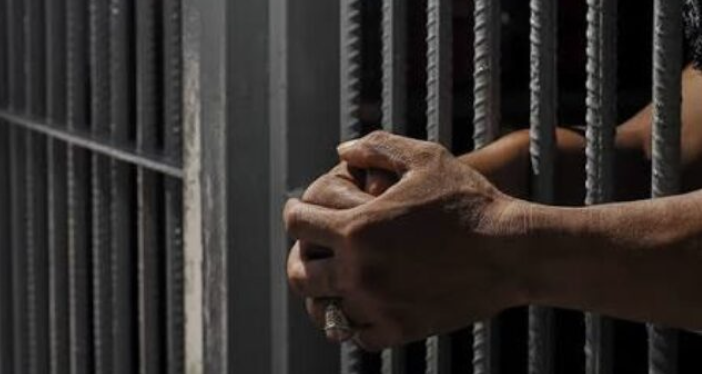
Interactive Dialogue with Working Group on Arbitrary Detention 15 September 2026 Mr. President, Arrests and detentions of aid workers increased…
Read More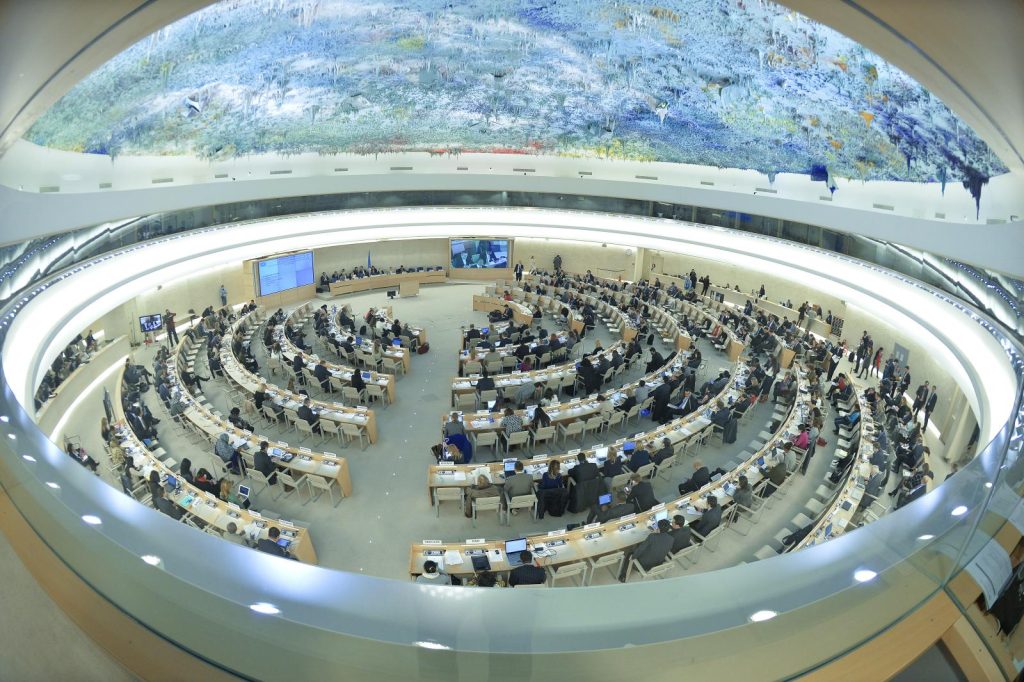
HRC 63 – Written statement on the situation in Sri Lanka
General Debate following High Commissioner update on Sri Lanka Monday 7 September Mr. President, Twenty years ago, on 4 August…
Read More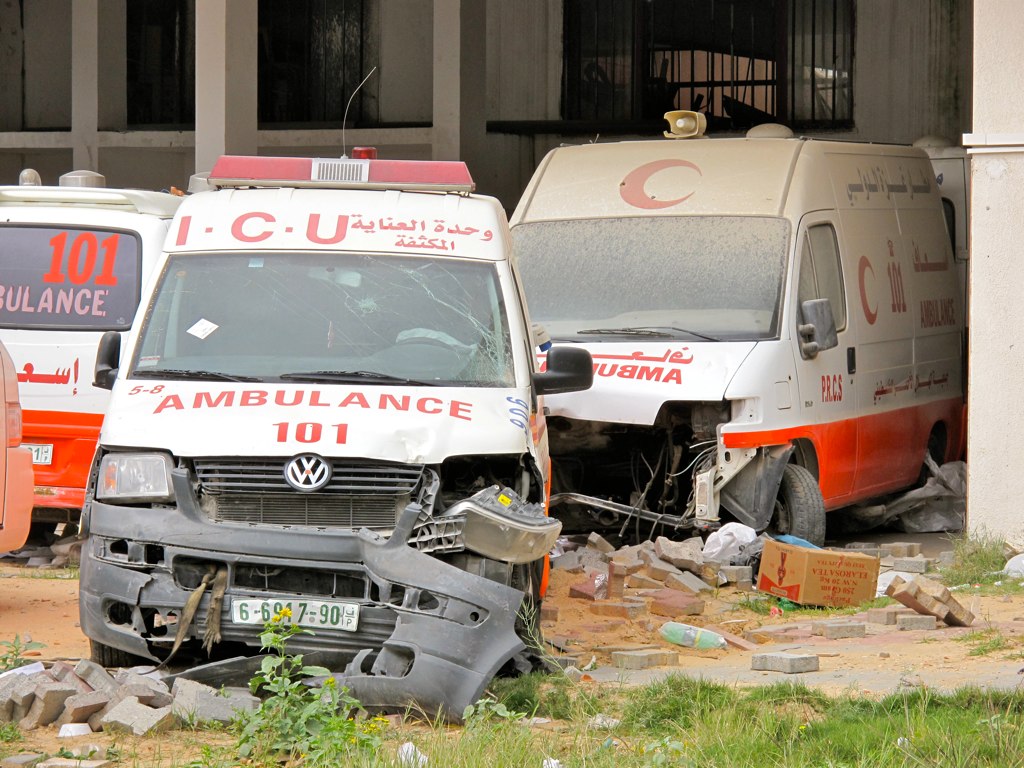
Gaza – Israel’s shocking decision to clear soldiers who killed seven aid workers
Press Release – 20 August 2026 Geneva (LAW) — On 19 August, as the world paid tribute to humanitarians who take enormous risks…
Read MoreAccountability Pathways for Attacks on Aid Workers
Legal Action Worldwide (LAW), with support from the Graduate Institute of International and Development Studies, examined the accountability options available to victims and survivors of attacks against aid workers and how they have been used in practice.
For this November 2026 report, we mapped global accountability pathways across three categories:
- Criminal accountability, through domestic and international courts and tribunals.
- Establishment of facts and attribution of responsibility, through UN human rights mechanisms, investigations, and other fact-finding bodies.
- Condemnation, reparations, and guarantees of non-recurrence, through legal, diplomatic, and political processes.
The limited available caselaw reveals a significant accountability gap. These attacks are rarely prosecuted and, charges often fail to reflect the specific legal protections afforded to aid workers. This limits the development of jurisprudence, weakens enforcement of existing protections, and contributes to an environment in which violations continue with little expectation of accountability.
Know Your Rights - Legal Factsheets for Aid Workers
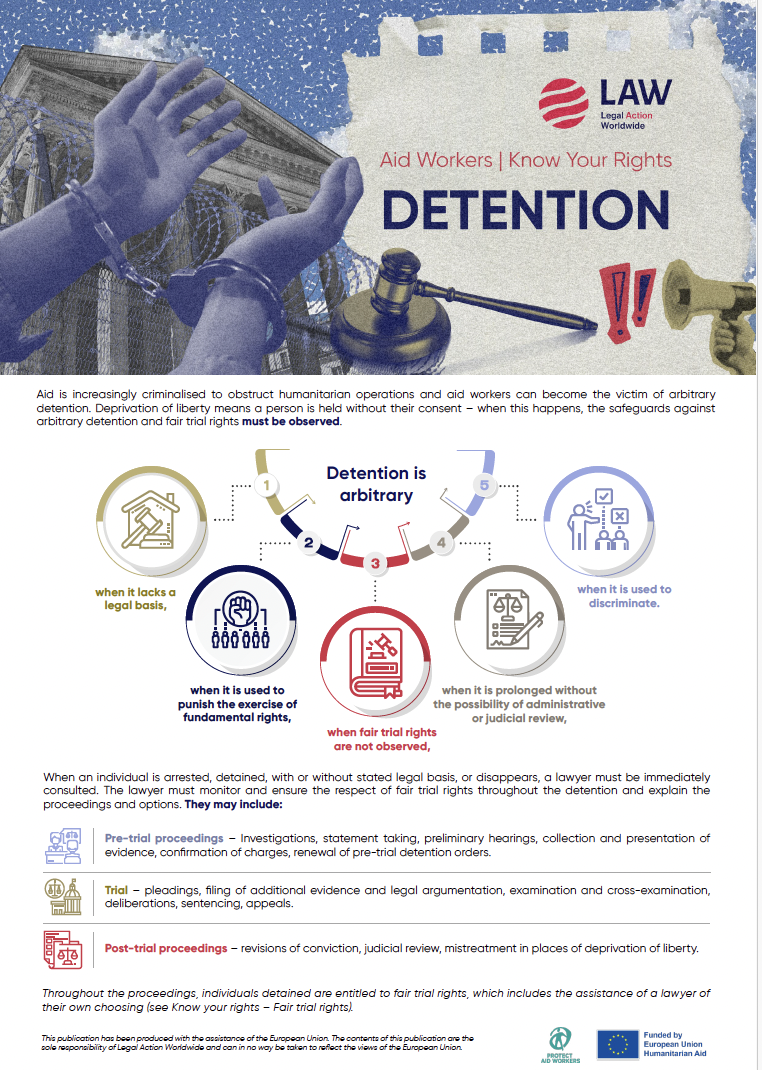
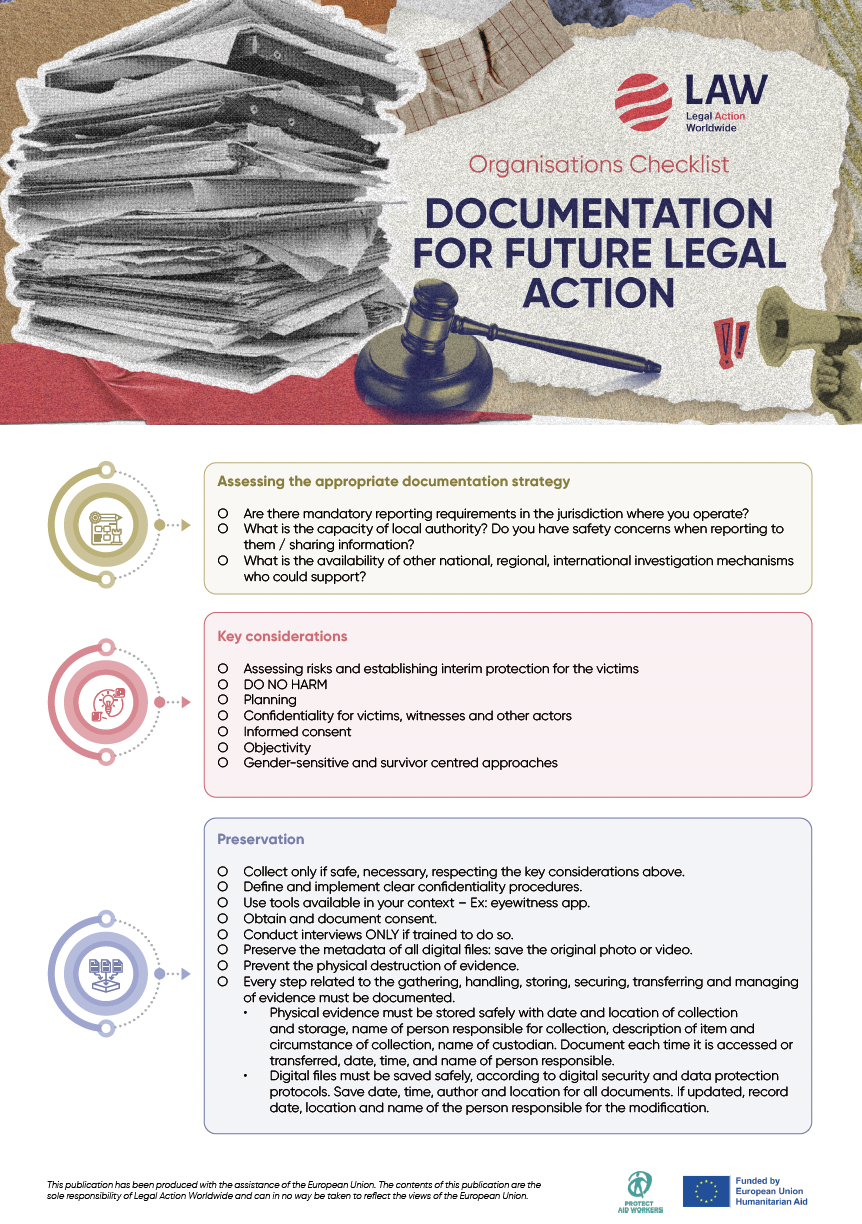
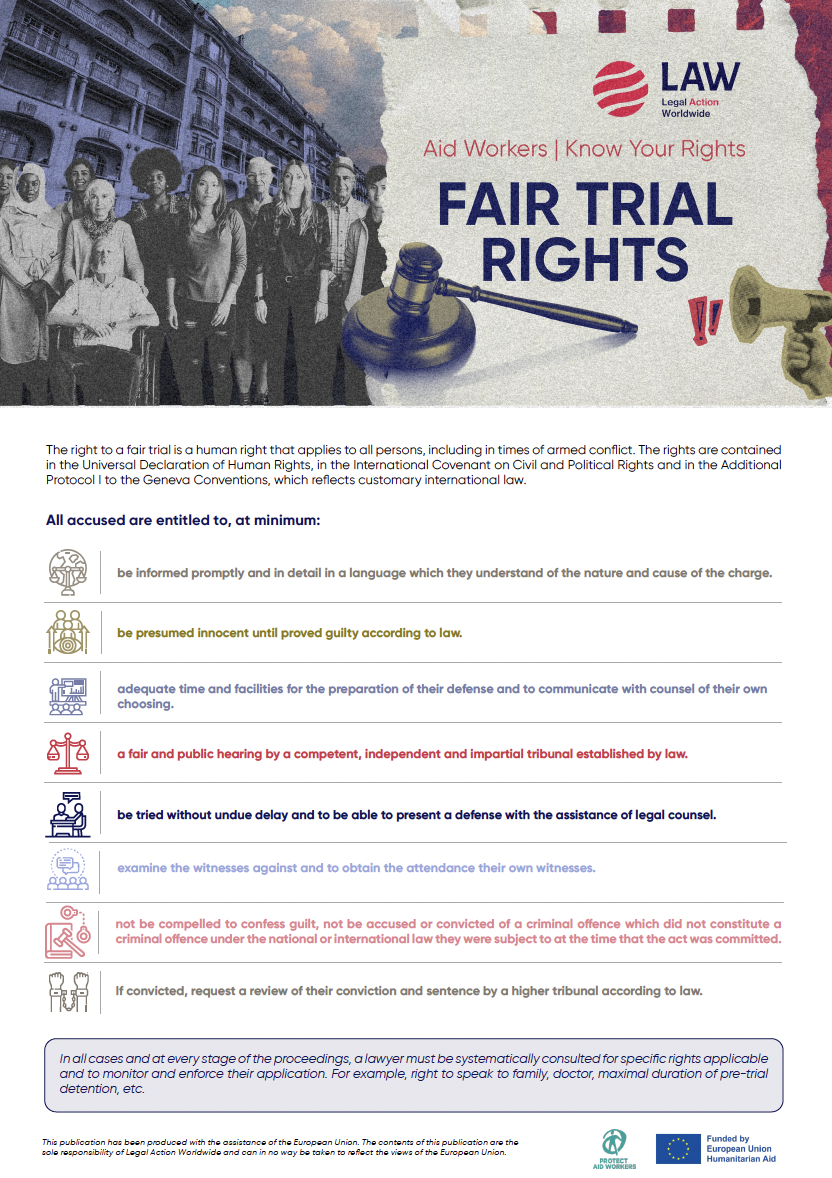
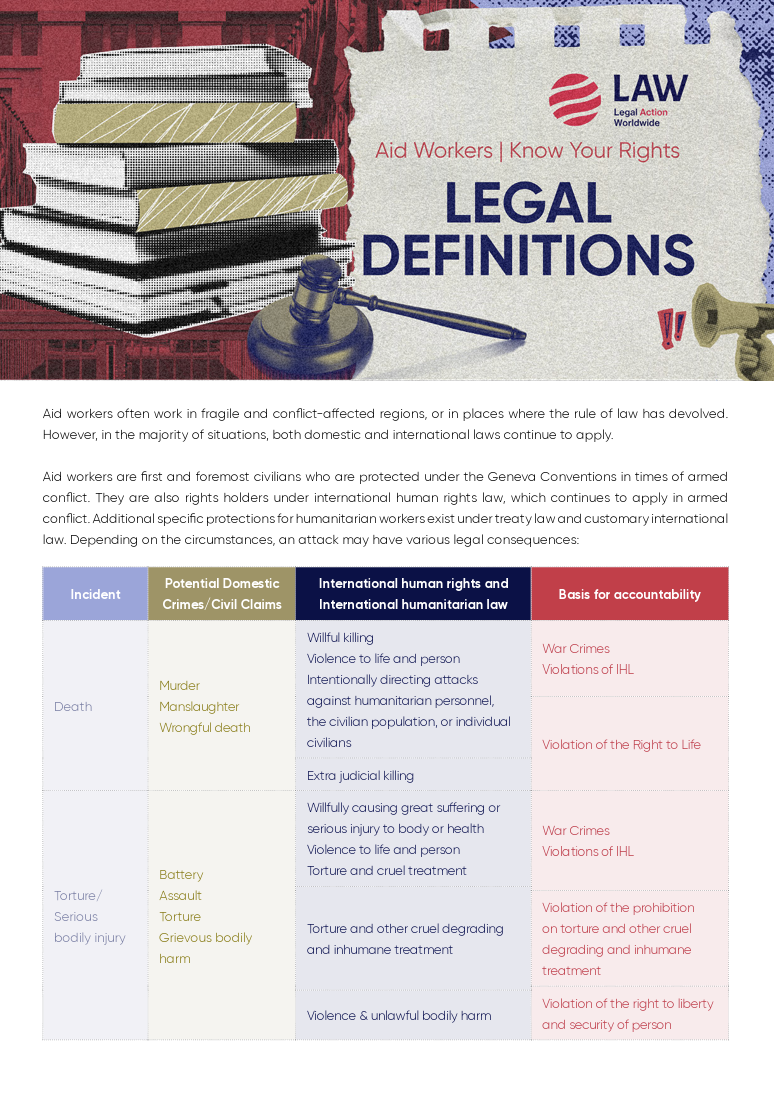
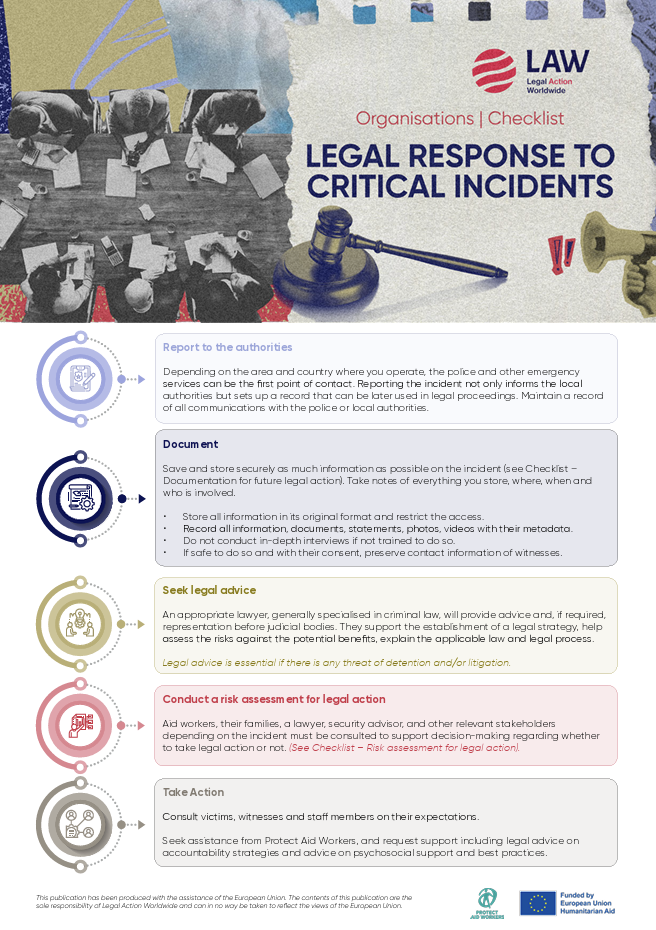
Understanding the legal protection tools available to humanitarian workers has never been more important. The factsheets below explain fundamental rights, outline available legal protections, and offer practical guidance on how to respond when violations occur. Factsheets on Detention, Documentation, Fair trials rights, Legal Definitions and Legal Response are available in five languages. Download to learn more about legal protections available to aid workers.
Latest Reports on Accountability for Aid Workers
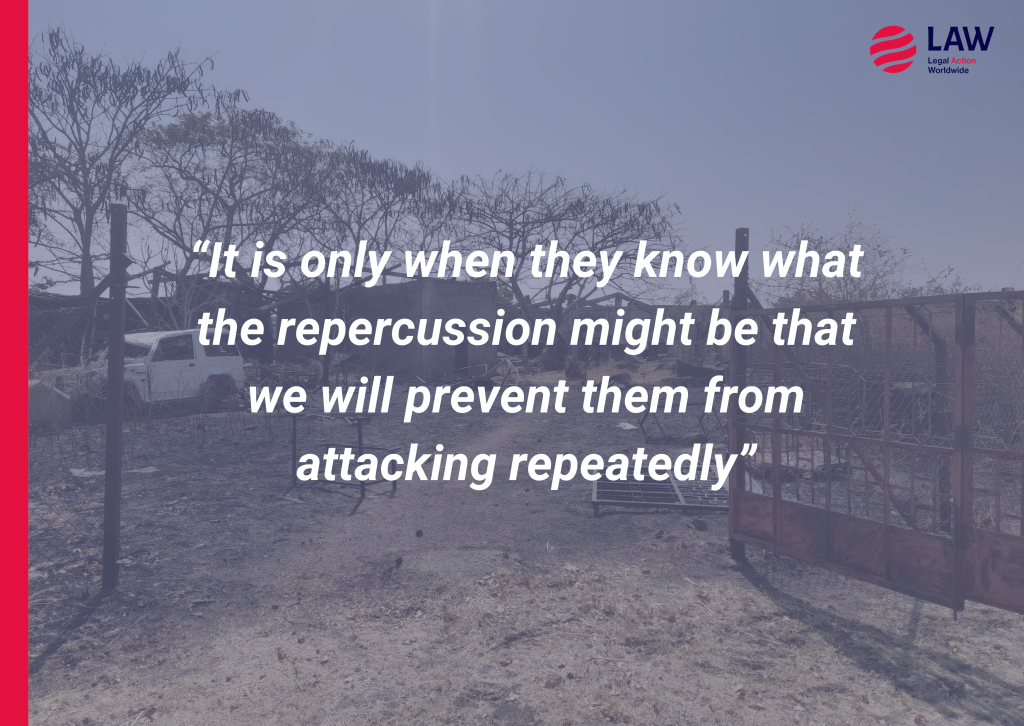
Report: Justice and accountability for attacks on aid workers – What are the barriers and how to overcome them?
Justice and accountability for attacks on aid workers: What are the barriers and how to overcome them? Research report …
Download