From documenting Myanmar military’s atrocities to supporting Rohingya survivors before the World Court
From documenting Myanmar military’s atrocities to supporting Rohingya survivors before the World Court
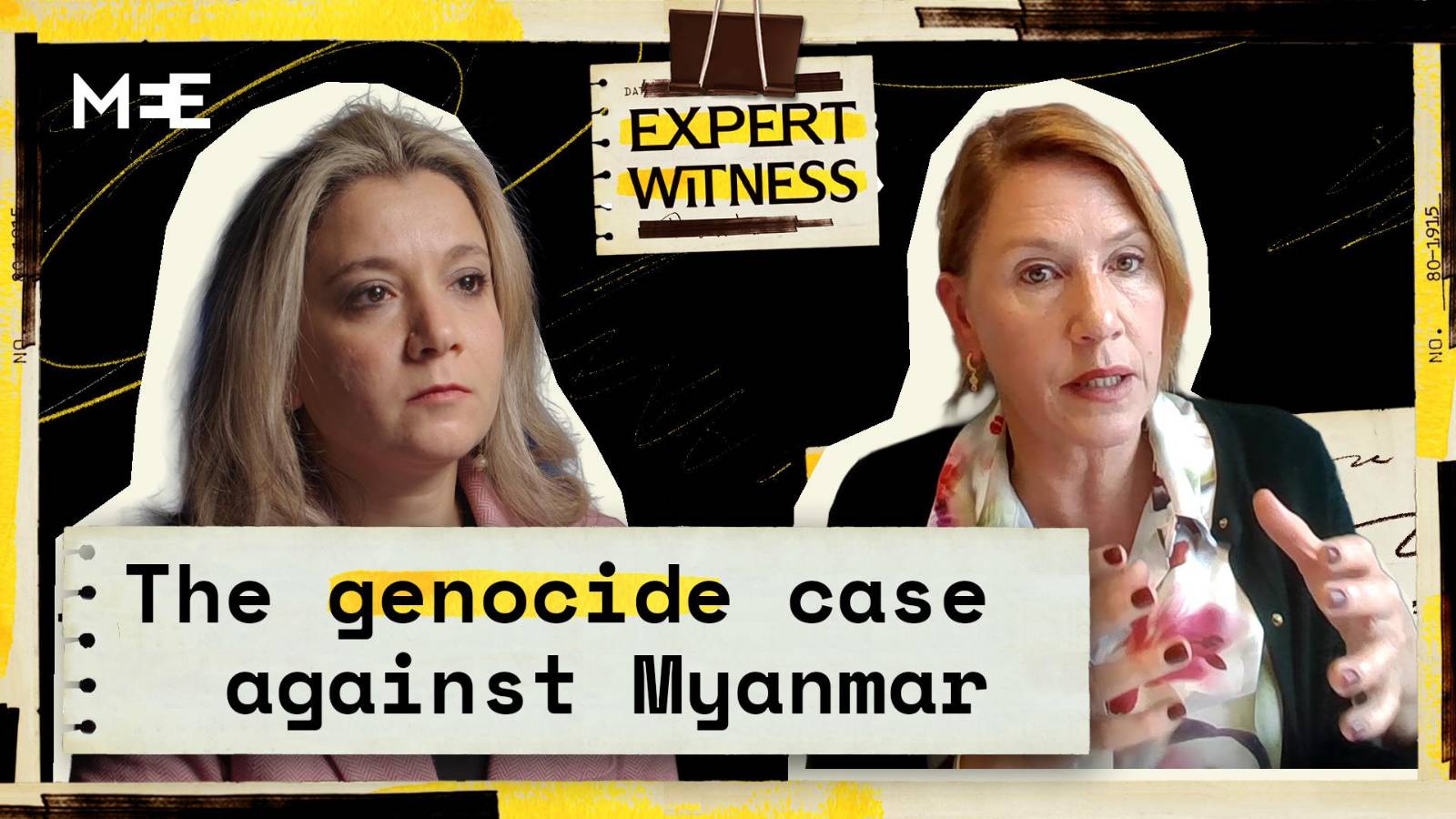
In an interview with Middle East Eye’s Expert Witness podcast with legal editor Sondos Asem, Antonia Mulvey reflects on the origins and significance of the Rohingya genocide case before the International Court of Justice (ICJ), the evidence of systematic sexual violence, and what justice must deliver for survivors.
When Antonia Mulvey, Founder and Executive Director of Legal Action Worldwide (LAW), arrived at the Bangladesh-Myanmar border in 2017, the scale of the devastation was immediately visible.
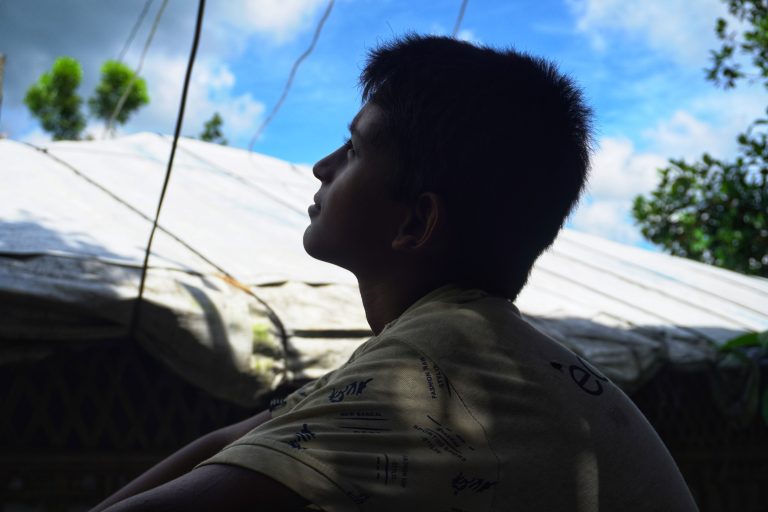
Deployed as a United Nations investigator following the Myanmar military’s so-called “clearance operations” in northern Rakhine State, she encountered hundreds of thousands of Rohingya fleeing burned villages, many carrying gunshot and machete wounds. Families had been separated, children killed and women and girls subjected to systematic sexual violence.
Antonia documented these crimes through direct interviews with survivors, often conducted under trees or in makeshift clinics near the Bangladesh-Myanmar border. Her work focused particularly on sexual violence and crimes against children, contributing to the 2018 report of the UN Independent International Fact-Finding Mission on Myanmar. The report called for senior military officials to be investigated and prosecuted for genocide, crimes against humanity and war crimes.
The findings would later become an important foundation for the case brought by The Gambia against Myanmar before the International Court of Justice (ICJ).
A case of historic importance
Filed in 2019, the case asks whether Myanmar breached its obligations under the 1948 Genocide Convention through the conduct of its military and security forces, including failures to prevent and punish genocidal acts, against the Rohingya.
Its importance extends far beyond one country. It is the first genocide case brought before the ICJ by a state that was not itself directly affected by the alleged crimes. The judgment will also be the Court’s first full merits decision on state responsibility for genocide in over a decade (Croatia v Serbia was decided in 2015).
At the centre of the proceedings is the question of genocidal intent. The Gambia argues that the pattern of killings, serious physical and psychological harm, deliberately destructive living conditions, and measures intended to prevent births can only reasonably be understood as an attempt to destroy the Rohingya, in whole or in part.
Sexual violence is central to that analysis. The evidence describes repeated gang rapes, mutilation, sexual enslavement and attacks targeting women and girls of reproductive age. These crimes were not isolated or incidental but formed part of a systematic pattern intended to cause profound physical, reproductive and social harm.
The ICJ has previously recognised that sexual violence can fall within the prohibited acts listed in the Genocide Convention. This case could go further by finding that such violence was committed with the specific intent required to constitute genocide and attribute responsibility for it to a state. The Court’s reasoning could therefore shape the interpretation of genocidal intent in other current and future proceedings.
Keeping survivors at the centre
Since establishing its permanent presence in Cox’s Bazar in 2018, LAW has worked to ensure that Rohingya survivors are not simply the subjects of international proceedings but active participants in them.
LAW has represented and assisted more than 500 Rohingya survivors and witnesses and supported a network of 70 Survivor Advocates providing legal information within the refugee camps. Beginning in 2019, LAW shared survivor evidence, legal research and technical assistance with The Gambia’s legal team. The organisation subsequently gathered hundreds of pages of witness testimony that contributed to The Gambia’s written submissions before the Court.
In January 2026, this long-term work reached a defining moment. LAW accompanied four Rohingya victims and three witnesses from the refugee camps in Cox’s Bazar, to The Hague for the full merits hearings. Three survivors represented and supported by LAW gave evidence directly to the ICJ, an exceptional development in an inter-state case. A Rohingya victim delegation, including a hijra survivor, was also present in Court, ensuring that people from communities most affected by the atrocities could witness the proceedings and make their demands heard.
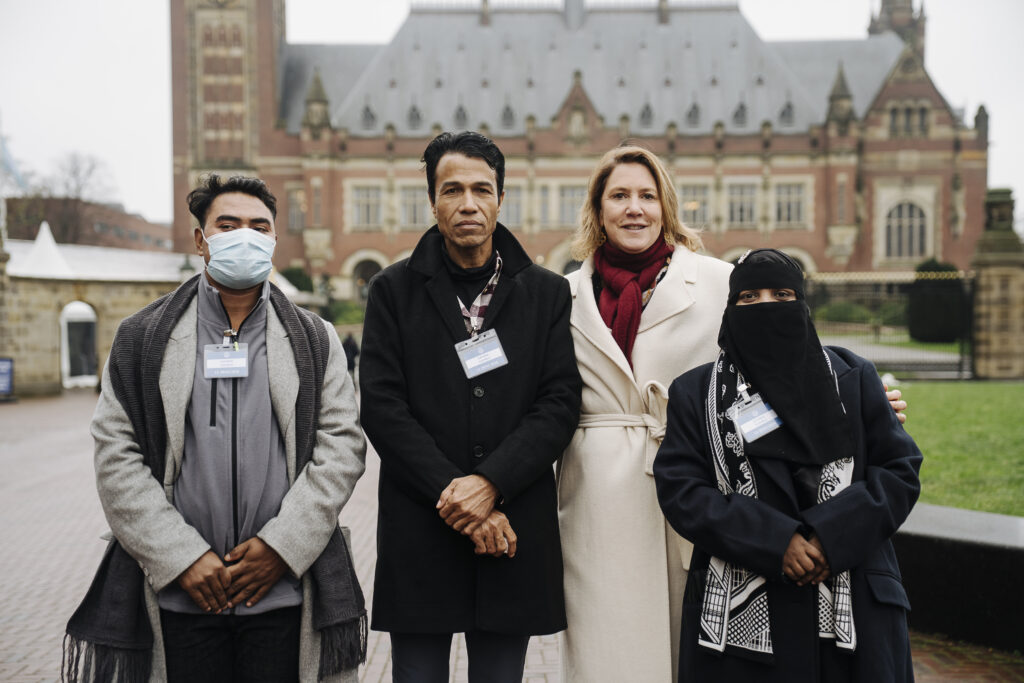
Their presence transformed the hearings. Survivors were able to confront Myanmar’s denials with their own testimony and ensure that the Court heard directly about the human consequences of the military’s actions.
“The decision to allow victims to speak directly to the Court is a watershed moment,” Antonia Mulvey said ahead of the hearings. “A community whose very existence has been denied […] will be heard by the world’s highest court.”
LAW has also connected Rohingya survivors with diplomats, UN representatives, journalists and international accountability mechanisms, while producing research on genocidal sexual violence, harm to children and the community’s expectations of justice. Throughout this work, survivor protection, informed participation and long-term legal support have remained central.
What justice means for the Rohingya
A judgment recognising Myanmar’s responsibility would provide an authoritative legal acknowledgement of what the Rohingya have endured. But recognition alone will not be enough.
Survivors have consistently demanded restoration of citizenship and legal identity, return of confiscated land and property, compensation, access to healthcare and education, accountability for those responsible, and the possibility of returning home safely and with full rights.
These priorities are reflected in LAW’s research with 444 Rohingya refugees. Eighty-six per cent identified citizenship and recognition of Rohingya identity as essential to justice, while only 16 per cent said punishment was necessary for them to feel that justice had been achieved. The findings demonstrate that justice for the Rohingya is not limited to criminal accountability. It is also about restoring the rights, identity, security and future that were taken from them.
Accountability efforts are also continuing beyond the ICJ. The International Criminal Court is investigating individual criminal responsibility in the Bangladesh-Myanmar situation, while proceedings under universal jurisdiction in Argentina have led to arrest warrants for senior Myanmar officials. LAW has supported Rohingya survivors engaging with these complementary justice processes.
A judgment will not implement itself
Together with the Special Advisory Council for Myanmar, LAW has examined five possible outcomes of the ICJ case, from a full finding that Myanmar committed genocide to partial responsibility, breaches of the Court’s provisional measures, mixed findings or dismissal on the merits.
The position paper’s message is clear: states must be prepared for every outcome. Even a finding of genocide will only make a difference if governments translate it into coordinated legal, diplomatic, economic, humanitarian and protection measures.
“A judgment does not implement itself,” Antonia Mulvey has stressed. Its real impact will depend on whether states act to support reparations, protect survivors, prevent forced returns, reinforce accountability efforts and help create the conditions for the Rohingya to return safely, voluntarily and with full rights.
Nearly a decade after the atrocities of 2017, the forthcoming judgment represents a historic milestone. But for LAW and the survivors it represents, it is not the end of the journey. It is another step in a long fight to turn testimony into recognition, recognition into responsibility, and responsibility into meaningful justice.