
“They Wanted to Erase Us”: The Lasting Impact of Genocide on Rohingya Children
Accountability & Rule of Law - Child Victims of CRSV - Rohingya Crisis - Advocacy - Legal Aid & Empowerment
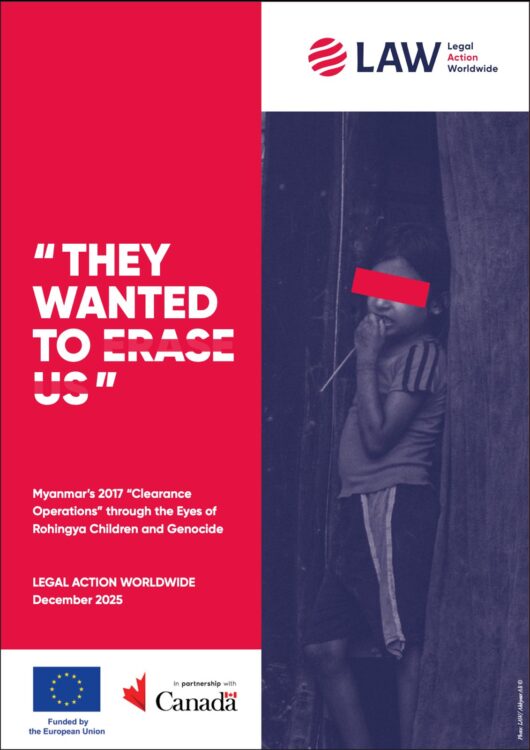
The first thing many Rohingya children remember of the 2017 genocide in Myanmar is death.
For some, it was the sound of soldiers kicking down their doors. For others, it was the sight of their mothers tied up and dragged away. But for too many (over 60%), it was watching their parents, siblings, or neighbours murdered in front of them.
One survivor, raped as a teenager in 2017, remembers the screams of her family as soldiers stormed her village.
“I was raped. My brother saw it and tried to protect me. They beat him very badly. My sister was raped at the same time, and her husband was killed trying to save her. He was beheaded. My sister survived but she became almost disabled. My father was badly injured; they hit him in his private parts, and he still suffers when he goes to the toilet. My mother was beaten on her head and body and later lost most of her eyesight. She begged them to rape her instead of her daughters. I saw with my own eyes when the militaries cut the breasts of women and killed them with knives. They slaughtered them like animals. My husband tried to protect me, but the military tied his hands and shot him dead in front of me. My brother is still mentally unwell. He hurts himself, and sometimes disappears from home. He cannot work or take care of himself.”
Her story is horrific. What’s even more horrifying is how commonplace it is among survivors.
In 2017, Myanmar’s military launched sweeping “clearance operations” across northern Rakhine. The world knows these attacks for their brutality: entire villages torched, women, girls, boys, men and transgender people raped, families slaughtered.
But new research from Legal Action Worldwide (LAW) reveals a devastating truth long overlooked in international justice efforts: the genocide did not only target the Rohingya people: it targeted Rohingya children in an attempt to erase the ethnic group’s future. And those who survived continue to carry the wounds.
The Myanmar military target children deliberately
New findings from LAW show that more than 40% of Rohingya survivors directly witnessed the killing of at least one immediate family member during the “clearance operations.” Nearly all saw corpses scattered across fields and riverbanks as they fled. Amongst the 40 participants to our research (all children at the time and today aged from 13 to 15 years old), 73% witnessed children being violently killed, including their own siblings, or in some cases their own infant (in the case of minor mothers).
Children were not collateral damage. They were targets, and the testimonies gathered by our teams and independent psychologists make this unmistakable.
A nine-year-old boy raised his arm to block a blow aimed at his neck; the blade sliced his hand instead. An eight-year-old girl still bears the scar of a rifle smashed against her forehead. A sixteen-year-old girl was abducted from her home, detained for a week, and shot in her arm while escaping. And in village after village, survivors recall infants and toddlers tossed into fires or rivers, stabbed, or trampled to death.
These are not accidents. They are evidence. As the ICC’s Office of the Prosecutor notes, children “embody the future of the targeted group,” making them frequent objects of genocidal intent. The Rohingya case shows how methodically and deliberately that intent was carried out by the Myanmar military.
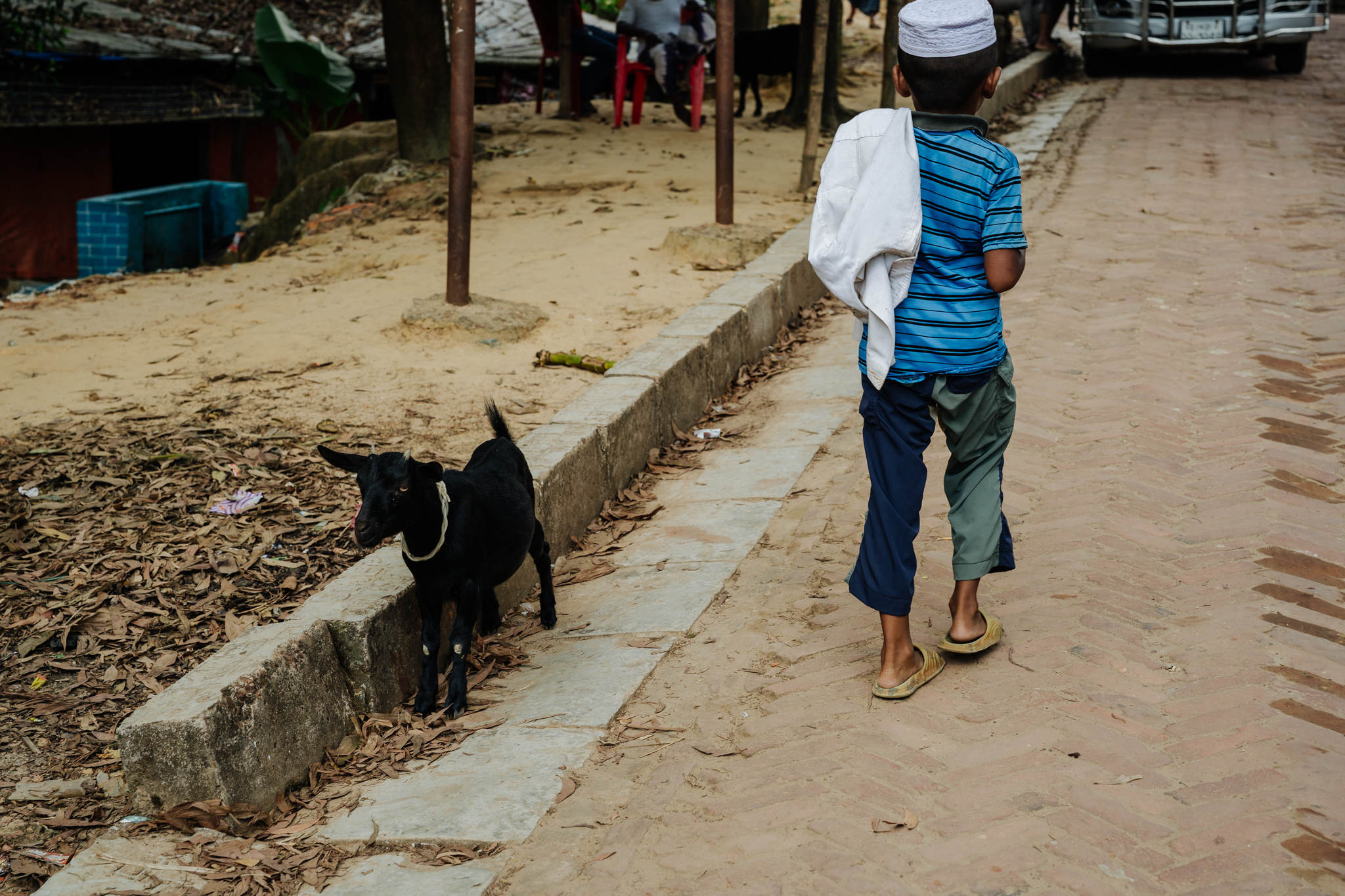
Additionally, LAW’s research reveals a pattern rarely documented in other conflict settings: the collapse of familial and communal bonds. Children describe an inability to trust adults, an absence of safety even with caregivers, and a fragmented sense of identity. And this is not the byproduct of displacement. Children born later in refugee camps do not show the same degree of psychological damage. The mental wounds can be traced directly to the violence of 2017, to the moment when the genocide entered their bodies and minds.
Psychologists working on the study describe signs of complex trauma: intrusive memories, chronic fear, emotional withdrawal, developmental delays, and an inability to form or maintain relationships.
One 15-year-old boy who lost both parents shared:
“When I think about my family, I go to a corner and stay alone. I separate myself from other people.”
Another boy, who witnessed the killing of his parents and four siblings, said:
“I don’t have close friends. I never had any kind of close relationship.”
A young transgender survivor, tortured and sexually assaulted, captured the silent agony shared by many:
“But the most painful thing is my father’s disappearance. We never knew what happened to him.”
International justice mechanisms have historically sidelined crimes against children, considering them witnesses or passive victims rather than intentional targets. As a result, the systematic assault on Rohingya children has remained under-recognized, under-documented, and under-prosecuted.
This must change now.
NOTE
This publication is funded by the European Union and Canada. Its contents are the sole responsibility of Legal Action Worldwide and do not necessarily reflect the views of the European Union or Canada.