
CSW70 – From the Front Lines to the Courtrooms
Accountability & Rule of Law - Gender Equality & GBV - Global - Advocacy
From the floor of the United Nations in New York, Legal Action Worldwide (LAW) brought the voices of survivors, frontline defenders, and the demands of accountability to the 70th session of the Commission on the Status of Women.
Over the course of two days on the margins of the 70th session of the Commission on the Status of Women (CSW70), LAW participated in four major panel events, each addressing a critical dimension of justice for women and girls in conflict. From the protection of aid workers to the prosecution of sexual violence as genocide, panelists underscored the importance of strategic, survivor-centred legal action, and its growing influence in shaping global policy.
Protecting those who protect others: justice for aid workers
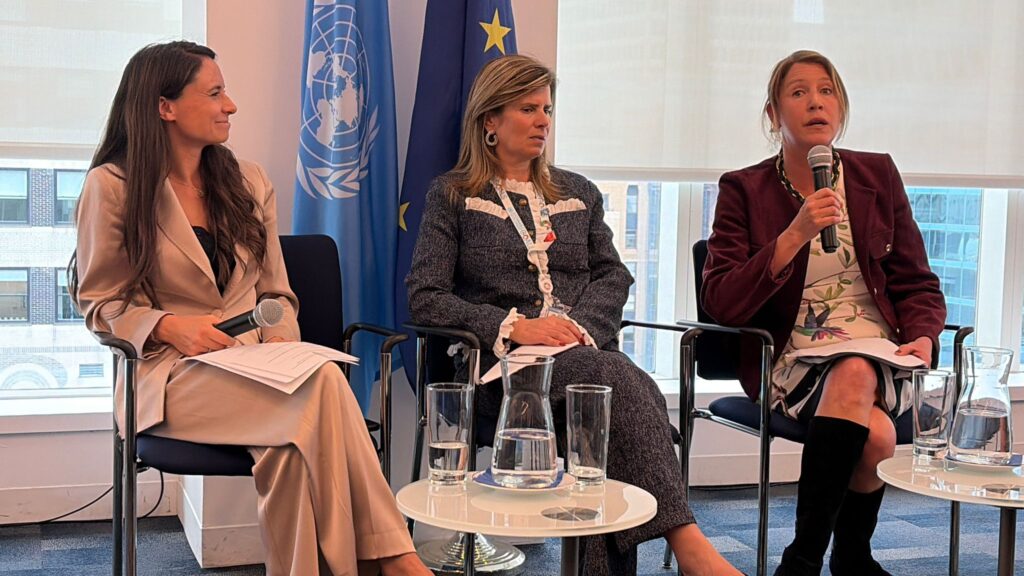
The week opened at the Permanent Delegation of the European Union to the UN, where LAW co-sponsored an event on strengthening access to justice for women humanitarian workers. Bookended by remarks from the European Commissioner for Equality, the Deputy Minister of Foreign Affairs of Sierra Leone, and Australia’s Ambassador for Gender Equality, the panel brought together Jeanne Frangieh of Association Himaya Daeem Aataa, Hanin Ahmed of the Sudanese Emergency Response Rooms, and Antonia Mulvey, LAW’s Executive Director.
The discussion confronted a troubling reality: despite the clear protections afforded to aid workers under international humanitarian law, women on the front lines of humanitarian response likely face a disproportionate risk of sexual and gender-based violence, with alarmingly little accountability and few efforts to collect quantitative data on how gender intersects with risk when it comes to aid workers. In particular, women make up the majority of domestic aid workers, in both formal and informal roles, and play a crucial role in providing immediate aid to civilians in conflict – it is critical that the impact of gender on their personal risk is not overlooked.
Panellists called on states to strengthen their domestic legal frameworks and open investigations when attacks occur. Over the past two years alone, LAW has supported more than 130 aid workers and over 30 organisations, and secured the release of 16 individuals arbitrarily detained while doing aid work.
“The more the attacks grow, the more we need to fight. And that’s exactly what we’re doing, both on the front lines and in the courtroom“, said Antonia Mulvey.
Survivor leadership at the heart of justice
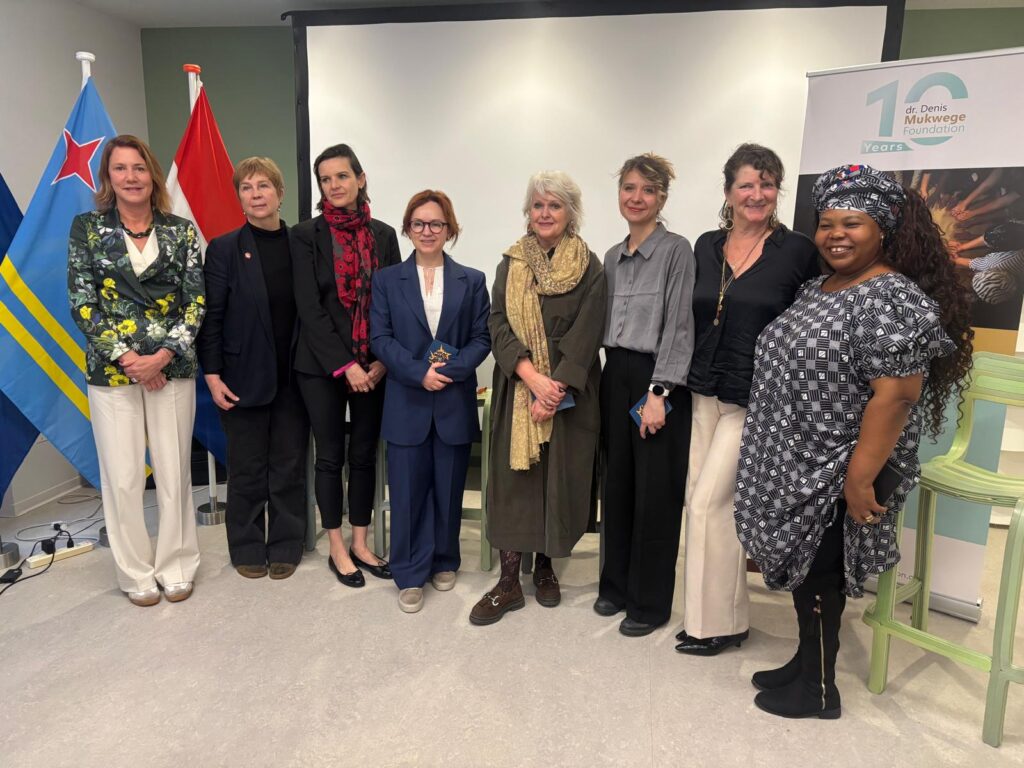
On 12 March, LAW joined the Mukwege Foundation, the Global Network of Victims and Survivors to End Wartime Sexual Violence (SEMA), and the Permanent Mission of the Netherlands for a panel on survivor-led advocacy in cases of conflict-related sexual violence. The panel brought together Congolese activist Tatiana Mukanire, founder of SEMA, and Ukrainian filmmaker and former soldier Alisa Kovalenko; two survivors who have placed themselves at the forefront of the fight for accountability.
A central message emerged: access to psychosocial services and legal processes alone is not enough. States must invest in the full leadership of survivors, ensuring they are not merely participants in justice, but architects of it. Drawing on her work as a UN investigator during the 2017 Rohingya clearance operations in Bangladesh, Antonia Mulvey shared what she heard directly from survivors on the ground: “We want justice. We want the world to know what has happened to us, our families, and our communities.”
Women, peace, and the architecture of accountability
Later that same day, LAW took part in a wide-ranging event hosted at the Permanent Mission of Ukraine on women’s participation in peacebuilding and justice as an integral element of peace. The event was co-organised by an extensive coalition including LAW partner organisation Ukrainian Women Lawyers Association (JurFem), the Georgetown Institute for Women, Peace and Security, the Global Survivors Fund, and the International Center for Transitional Justice.
Antonia Mulvey joined the panel focused on how transitional justice processes can be designed to meaningfully include women, making the case that the legal tools for accountability already exist, and that what is required now is the political will to apply them. “We have the legal frameworks for accountability”, she said. “Let us now have the courage to apply them equally to all survivors.”
Prosecuting genocide in Darfur: LAW and SIHA launch joint report
Closing out LAW’s participation at CSW70, the organisation co-hosted a landmark event with its partner Strategic Initiative for Women in the Horn of Africa (SIHA), focused on prosecuting sexual and reproductive violence as genocide in Darfur. At the event, LAW and SIHA launched their joint report, Over 500 Days of Siege: Foreign Arms and the Rapid Support Forces’ Campaign of Sexual and Genocidal Violence in El Fasher, Sudan, which documents the role of foreign arms — including those sourced from the United Arab Emirates — in fuelling the RSF’s genocidal siege of El Fasher between April 2024 and October 2025.
The panel featured Nadia Taha of Sudan Action Hub, herself from El Fasher, who bore witness to a quarter-century of violence against her community; Joy Ngozi Ezeilo of the UN’s Independent Fact-Finding Mission on Sudan, which has found the attacks in El Fasher bear the hallmarks of genocide; and Macarena Sáez of Human Rights Watch, who outlined the international legal framework for prosecuting sexual violence as a genocidal act.
Antonia Mulvey outlined LAW’s strategic litigation approach pursuing accountability through multiple pathways including the International Criminal Court and universal jurisdiction cases. “When member states can stand up, when the UN meticulously collects evidence, and when frontline organisations work with victims and survivors, we can find justice in different forms,” she said.
From New York to the courtroom
Discussions at CSW70 reflected the essence of our work: defending the rights of women in conflict through law, evidence, and advocacy from Sudan to Ukraine, from the Rohingya crisis to the halls of the United Nations. Across every panel, a common thread ran through the discussions: the international legal frameworks for accountability exist. The question is whether the world has the courage to use them. LAW will continue to pursue that accountability, through litigation, survivor-centred advocacy, and strategic partnerships.