
For Sudanese refugee girls, access to education is essential: Yumna’s story
Child Victims of CRSV - Gender Equality & GBV - Sudan - Legal Aid & Empowerment
“Even when war took away my classroom, it did not take away my voice.” – Yumna says.
When the fighting reached Gezira, Sudan, 15-year-old Yumna Mustafa Mohammed’s world changed overnight. Gunshots replaced school bells. Fear replaced routine. When crisis disrupts education, girls face heightened risks of exploitation, early marriage, and violence.
In 2024, Yumna and her family fled across the border to Uganda, eventually settling in Kiryandongo Refugee Settlement. For the first time in months, she felt safe. But safety did not immediately restore what war had taken away.
“We lived in constant fear,” Yumna recalls. “There were gunshots, insecurity, and chaos. We did not know what would happen next. I felt peace when we arrived in Uganda. But I could not go to school. Being out of school made me feel uncertain about my future.”
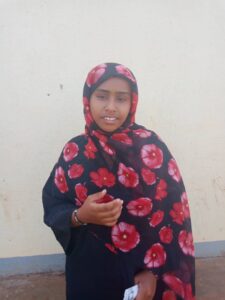
Yumna during the training
For a young girl who once dreamt of learning and building a better life, that uncertainty weighed heavily. Like many refugee girls, Yumna faced layered challenges: displacement, interrupted education, and heightened risks of gender-based violence.
That is when she joined Legal Action Worldwide’s programme under the Education Cannot Wait (ECW) project, a turning point she describes as life changing.
Learning her rights and finding her voice
Through LAW’s training sessions, Yumna was introduced to human rights, children’s rights, refugee rights, and the Refugee Convention. She also learnt about women’s rights and gender equality in education, health, employment, and leadership.
UNICEF reported on child marriage in Sudan that affects girls disproportionately, compromising their development, and impairing their ability to pursue education. The survey showed that 60.2 per cent of girls aged 20-24 years were first married or in union before 18 years of age.
“For the first time, I understood that education is not just something useful; it is my right,” she says. “I also learnt about Gender-Based Violence, especially sexual violence, and where to report and seek justice inside the refugee settlement.”
For the young girl, these sessions went beyond legal literacy. Through advocacy, leadership, and Social Emotional Learning (SEL), Yumna rebuilt her confidence and resilience. “The SEL sessions reminded me that even though I have faced many challenges, my future is still full of possibilities,” she explains. “I now believe in myself.”
One of her proudest moments came during the launch of the 16 Days of Activism against Gender-Based Violence, where she performed in a skit addressing digital violence against women and girls. “Standing there, speaking about online violence, I felt strong,” she says with a smile. “I was not just acting. I was standing up for girls like me, both online and offline.”
From participant to advocate
Today, Yumna is not only a beneficiary of the programme, but she is also becoming a young advocate in her community. “I hope to return to school next year,” she says firmly. “And I want to sensitize other girls about their rights. Many girls do not know that they have protection under the law.”
Her journey reflects a broader reality: when education is restored alongside legal awareness and psychosocial support, girls can reclaim their futures.
LAW’s commitment under Education Cannot Wait Project
Yumna’s story reflects the broader impact of Legal Action Worldwide’s work under the Education Cannot Wait project, ensuring that education in emergencies is not limited to classrooms alone, but includes protection, empowerment, and access to justice.
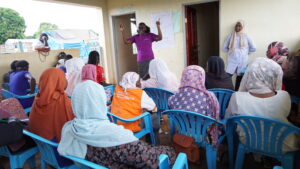
During sessions girls learn about their rights and how to become community leaders
To address the challenges faced by girls like Yumna, LAW is:
- Empowering girls with knowledge of their rights through targeted legal awareness on human rights, refugee protections, and gender equality, equipping them to report and seek redress for GBV.
- Expanding access to justice by providing legal aid, safe referrals, and strengthening accountability systems within refugee settlements.
- Championing gender equality in education through community sensitization and advocacy to keep girls in school.
- Building resilience and leadership by integrating Social Emotional Learning, advocacy training, and youth-led initiatives that boost confidence and voice.
- Creating safe reporting pathways for both digital and offline violence, ensuring girls can speak up without fear.
- Engaging communities, including men and boys, to challenge harmful norms and promote safer, more inclusive environments for girls.
By combining education with legal empowerment, LAW ensures that girls are not only back in school, but safe, informed, and equipped to lead change in their communities.
A Future Reclaimed
For Yumna, the impact is deeply personal. “I feel empowered, confident, and inspired,” she says. “The training has given me knowledge and courage. I want to help create a safer and more equal environment for all girls.”
Her story is a reminder that education in emergencies is not only about classrooms, but also about dignity, protection, and possibility. And as Yumna prepares to return to school, she carries more than books. She carries awareness. She carries resilience.
Most importantly, she carries a voice; one that war could not silence.