
New Report Exposes Patterns of Sexual Violence in Post-Coup Myanmar
Child Victims of CRSV - Gender Equality & GBV - Myanmar - Advocacy - Legal Aid & Empowerment
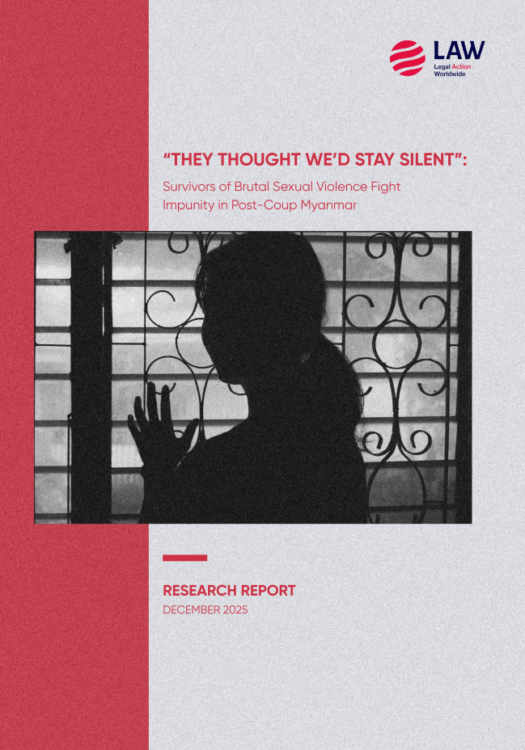 Download full report in English
For more than seventy years, sexual and gender-based violence has been woven into the fabric of Myanmar’s military operations. Since independence in 1948, ethnic minorities have endured rape, sexualised torture, and targeted abuse as part of the military’s strategy of domination. The world witnessed this brutality in 2017, when sexual violence committed against the Rohingya became a central element of the genocidal “clearance operations.”
In the aftermath of the 2021 coup, these atrocious crimes have intensified and spread.
A new report by Legal Action Worldwide (LAW) reveals a dramatic escalation of conflict-related sexual violence (CRSV) in regions where such patterns had not previously been recorded. Sagaing and Magway, at the epicentres of the post-coup conflict, now show extensive, coordinated, and systematic sexual violence deployed as a deliberate tool of terror and collective punishment, with identified victims as young as five and as old as seventy.
Myanmar military forces committed systematic crimes during village raids from 2021-2023, including rape and gang rape of women, girls, and pregnant women, often in front of family members. Survivors described torture like biting genitals, inserting objects, and smearing irritants on wounds; men and boys faced forced rape, genital mutilation, and burning of penises as humiliation tactics, and LGBTQI+ individuals were also victims of sexual violence. Additional abuses encompassed executions, arson, arbitrary arrests, leaving survivors with lifelong trauma, infections, fistulas, and stigma.
War crimes and crimes against humanity
LAW’s findings depict two dominant patterns of abuse. The first is sexual violence perpetrated during military operations, often involving gang rape accompanied by brutal physical torture aimed at extinguishing communal resistance. The second occurs in interrogation centres, such as Shwe Phyi Thar, Nine-Mile, Mandalay Palace, and Mya Taung, where sexual violence is used systematically to break detainees, humiliate them, and force confessions. Survivors describe sexualised torture most frequently in the earliest phases of detention, underscoring the intentional use of these crimes as tools of control and repression.
Based on consistent evidence collected since the coup, the report finds reasonable grounds to conclude that Myanmar’s security forces, including the military, intelligence agencies, police, and allied militias, have committed war crimes and crimes against humanity, including rape, sexual violence, torture, persecution, and murder.
The report also documents instances of CRSV committed by non-state armed groups, including elements of the People’s Defence Forces (PDF), Ethnic Revolutionary Organisations (EROs), and the Arakan Army. While these abuses do not appear to be the result of an organised policy, they nonetheless contribute to a conflict environment in which sexual violence has become dangerously normalised across multiple actors.
In parallel, domestic and intimate-partner violence has also surged, reflecting how gender-based violence has permeated every layer of Myanmar’s wider “polycrisis”, namely armed conflict, political collapse, and economic instability.
Urgent measures needed
Today in Myanmar, the true scale of CRSV remains hidden. Survivors face profound stigma, fear reprisals, and have little or no access to medical, psychosocial, or legal support. Many choose silence, while those who speak do so at extraordinary personal risk. LAW and its partners confronted severe security challenges in gathering testimonies, a reality that contributes to the invisibility of these crimes and obstructs pathways to accountability.
The report calls for urgent, coordinated action. States should initiate structural investigations under universal jurisdiction, strengthen sanctions against perpetrators, and advance international accountability processes, including an ICC referral from the UN Security Council.
Survivors need meaningful protection, rapid resettlement pathways when participating in legal proceedings, and sustained investment in holistic, survivor-centred services. Supporting grassroots documentation and emerging governance systems is essential to building long-term, gender-just accountability mechanisms.
While the Junta has planned sham election in December, it continues to commit war crimes and crimes against humanity on its own population.
“We do not ask for pity. We demand justice. Our voices testify not only to suffering but also to resilience and the determination to break this cycle of violence. We refuse to let our pain be forgotten, and we refuse to allow perpetrators to escape accountability because of rank, power, or political compromise”, said The Survivors United for Rights and Justice – SURJ.