
Accountability For Aid Workers
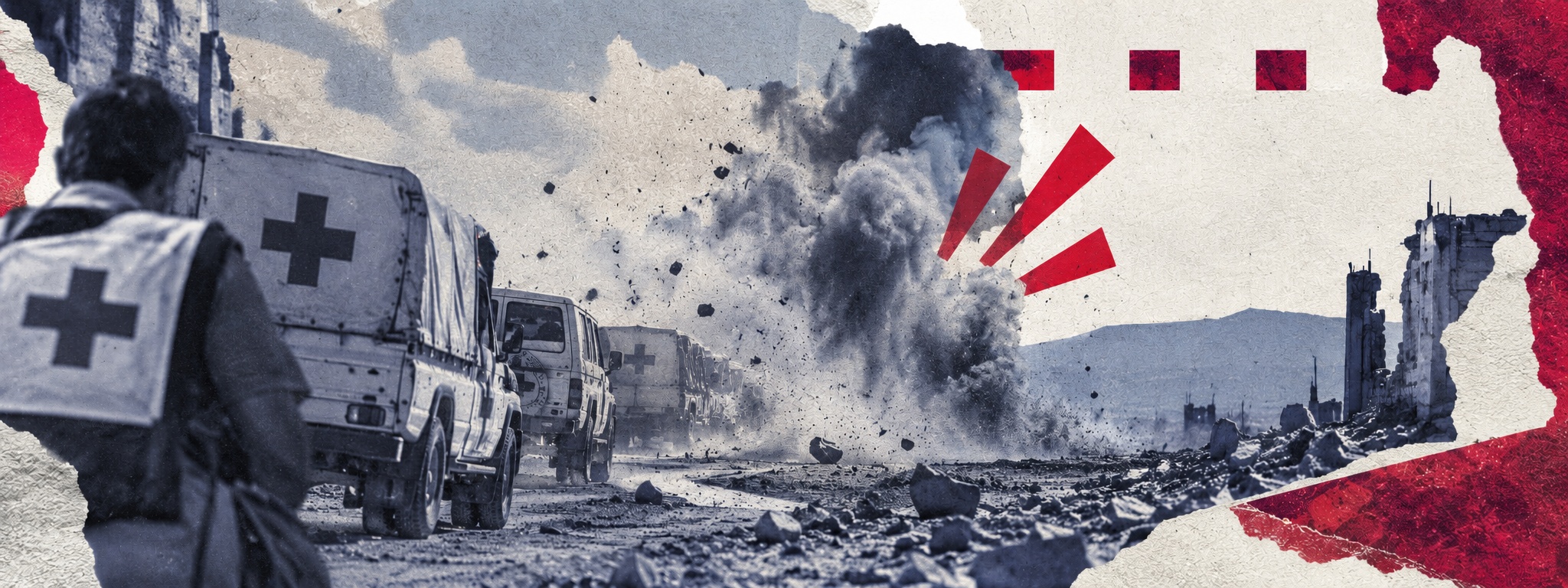
Attacks against aid workers have quadrupled over the past decade, reaching a shocking all-time high of 390 aid workers killed in 2024 and 350 in 2025. In the same year, 280 aid workers were arrested or detained, a 271% increase from 2024. These violations continue despite the protections afforded to humanitarian personnel under international law, UN Security Council Resolution 2730, and the 2025 Declaration for the Protection of Humanitarian Personnel, with near-total impunity.
Very few perpetrators are being held accountable and there are virtually no prosecutions. Very few aid workers receive legal advice about the range of options to pursue justice and accountability. Just a few organisations are equipped to support their staff to pursue legal action, which is often viewed as too challenging and unlikely to succeed.
Latest News
View all-
News
HRC 63 – Written statement on arbitrary detention
Accountability For Aid Workers - Global - Advocacy
-
Press Release
Gaza – Israel’s shocking decision to clear soldiers who killed seven aid workers
Accountability For Aid Workers - Global News - oPt/Israel - Advocacy
-
Blog
World Humanitarian Day – Justice for Aid Workers Under Attack
Accountability For Aid Workers - Global - Advocacy - Legal Aid & Empowerment
What do we do?
Protection of civilians including aid workers depends on closing the gap between legal obligations and enforcement. Every serious attack on an aid worker, whether national or international, should trigger a consistent response: condemnation, preservation of evidence, access to legal support, representation for survivors and victims’ families, and a credible, well-resourced pathway to investigation and accountability.
LAW offers free legal support to humanitarian workers, their families, and their organisations when they are targeted, arbitrarily detained, killed, threatened, preventing them from providing vital aid to civilian populations.
LAW’s Protection of humanitarian personnel programme, started in 2022, seeks to:
- Increase legal services to humanitarian personnel who have been targeted, including referral for psychosocial and medical support
- Facilitate investigations and accountability processes through the creation of a lawyers for aid workers network,
- Ensure that survivors and victims’ voices are amplified and that they meaningfully participate in discussions with Member States and humanitarian actors.
LAW is part of the Protect Aid Workers Initiative (PAW), a consortium of INGOs established in 2023 and supported by the European Union (EU) Directorate-General for European Civil Protection and Humanitarian Aid Operations (ECHO). PAW provides practical and financial support that enables national staff and their families to better process and recover after incidents, when national humanitarian personnel are affected by violence or arrest due to their work. This includes legal assistance, provided by LAW.
Since 2025, LAW is an implementing partner of the fourth key area, “increased accountability and justice”, of the Declaration on the Protection of Humanitarian Personnel signed in September 2025 under the leadership of Australia. The programme addresses the critical needs of humanitarian personnel who are victims and survivors of crimes, particularly when they could constitute violations of international law, and with focus on violence specifically targeting and affecting women humanitarian personnel and women-led humanitarian organisations.
LAW is working with Switzerland on the implementation of the recommendations of the Secretary General pursuant to UNSC Resolution 2730 (2024).
Know Your Rights: Legal Factsheets for Aid Workers
In recent years, aid workers have faced an alarming increase in targeted attacks, violence, arbitrary detention, and other violations of their rights while carrying out their life-saving work. As conflicts worldwide become more protracted and humanitarian space continues to shrink, aid workers are more and more exposed to legal and security risks simply for providing assistance to people in need.
Understanding the legal protection tools available to humanitarian workers has never been more important. To ensure humanitarian personnel can access the relevant legal resources and support they need, Legal Action Worldwide (LAW) has developed a series of practical factsheets that provide accessible legal information on key issues they may encounter in the course of their work. The factsheets explain fundamental rights, outline available legal protections, and offer practical guidance on how to respond when violations occur.
Factsheets on Detention, Documentation, Fair trials rights, Legal Definitions and Legal Response are available in five languages. Download to learn more about legal protections available to aid workers.
Accountability Pathways for Attacks on Aid Workers
Legal Action Worldwide (LAW), with support from the Graduate Institute of International and Development Studies, examined the accountability options available to victims and survivors of attacks against aid workers and how they have been used in practice.
For this November 2026 report, we mapped global accountability pathways across three categories:
- Criminal accountability, through domestic and international courts and tribunals.
- Establishment of facts and attribution of responsibility, through UN human rights mechanisms, investigations, and other fact-finding bodies.
- Condemnation, reparations, and guarantees of non-recurrence, through legal, diplomatic, and political processes.
The limited available caselaw reveals a significant accountability gap. These attacks are rarely prosecuted and, charges often fail to reflect the specific legal protections afforded to aid workers. This limits the development of jurisprudence, weakens enforcement of existing protections, and contributes to an environment in which violations continue with little expectation of accountability.
-
Accountability Pathways for Attacks on Aid Workers
Justice and accountability for attacks on aid workers – What are the barriers and how to overcome them?
The increase in attacks against humanitarian personnel has a direct impact on civilians who need to access life-saving services. Noting the humanitarian community’s outrage and call for concrete action, LAW’s research from May 2024 proposes recommendations to improve accountability of the perpetrators of attacks and justice for the victims.
For this research, extensive consultations were undertaken, including interviews with 73 individuals from 43 different organisations, roundtables with 26 experts, an anonymous online survey of 28 national and international aid workers and a review of 24 reports, articles and sets of guidelines available in open source.
The research reveals that while 81% of the aid workers who took the online survey had been the victim or had a colleague who was the victim of an incident of violence in the course of their work, and 83% would like to get legal advice if they were the victim of violence, only 18% did obtain legal advice.
Four main barriers
- Lack of access to legal information and assistance. Aid workers often did not know which legal frameworks provide protection to aid workers and which legal avenues are available. Legal assistance was generally misunderstood and undervalued.
- View that pursuing justice as too difficult, expensive, and risky. Due to the difficult contexts in which they operate, aid workers are reluctant to consider engaging with formal justice systems due to perceptions about lack of capacity and corruption. They are also discouraged by how long processes take, and how much they cost. They raised concerns about the risk of reprisals to staff and their families.
- Shifting of Responsibility. There is an overwhelming perception that organisations are exclusively responsible for incidents affecting their staff, almost to the exclusion of the perpetrator. In addition, national staff members especially tend to normalise violence, which leads to a sense that they have no legitimacy to initiate legal proceedings.
- Fear of Losing Access and Funding. Aid workers fear that initiating proceedings could result in a loss of access to vulnerable communities and consequently result in a loss of funding.
Six concrete and creative recommendations
- Establish a pool of qualified and independent lawyers to provide free legal information, assistance, and representation to humanitarian personnel and especially locally recruited personnel. Receiving legal information, being heard, understanding the violations you have suffered, and hearing the options available for legal redress is already a crucial step in the recovery process of a victim of crime. Lawyers can provide legal information and assistance, represent them throughout legal processes when appropriate, undertake risk assessments and take measures to mitigate risks.
- Create a roster of deployable and experienced experts/investigators and an online helpline to conduct independent investigations into incidents when appropriate and to advise organisations on immediate steps to collect and preserve evidence, significantly improving the likelihood of perpetrators being held accountable later.
- Ensure systematic dialogue and a response to the targeting of humanitarian personnel by organising an annual forum of relevant stakeholders to review the numbers of attacks and efforts to address justice and accountability. In addition, justice and accountability should systematically be on the agenda of the IASC Principals, to ensure that a space is specifically created to discuss and strategise on how to address this complex but critical issue.
- Report on action taken on justice and accountability, including investigations, to the UN Security Council and UN General Assembly, through the Emergency Relief Coordinator or another UN mechanism. In the event of a serious incident or series of incidents that could constitute a serious violation under IHL, there must be an immediate requirement to deploy qualified and independent investigators to support, where appropriate, state investigations.
- Improve internal procedures to ensure that aid workers can safely access legal assistance and ensure that legal assistance is part of the duty of care package. Managing the risks around accessing legal assistance and pursuing justice and accountability can be integrated into organisational risk management strategies, which should also include a detailed analysis of the impact of failing to address impunity on access to vulnerable communities.
- Support organisations who pursue justice and accountabilityby engaging UN Country Teams and donors who have a close relationship with national authorities at the highest levels. They can support NGOs or individual aid workers who risk losing access or fear reprisals, through diplomatic intervention.
Member States, the UN and NGOs must urgently act to improve access to justice for humanitarian personnel when they are the victim of attacks or are under threat due to their work as a humanitarian. They must support efforts to hold the perpetrators accountable. Mechanisms providing legal aid for aid workers, such as the Protect Aid Workers project and LAW’s accountability for aid workers initiative must be funded and accessible to humanitarian personnel, especially locally recruited personnel.
-
Justice and Accountability for Attacks on Aid Workers