ICJ: Navigating the Forthcoming Genocide Judgment in The Gambia v. Myanmar
ICJ: Navigating the Forthcoming Genocide Judgment in The Gambia v. Myanmar
For nine years, Rohingya survivors have carried a truth the world has been slow to confront: that the violence inflicted on them in 2016 and 2017 was the culmination of decades of exclusion, persecution, and organised destruction. In January 2026, when Rohingya witnesses gave evidence before the International Court of Justice (ICJ) in the merits hearings of The Gambia v. Myanmar, that struggle entered a new phase. Legal Action Worldwide (LAW) was honoured to support the survivors who testified and The Gambia’s legal team in those historic proceedings.
The Court is now deliberating, and its judgment is expected in the second half of 2026 or early 2027. A new position paper by LAW and the Special Advisory Council for Myanmar (SAC-M), Navigating the Forthcoming ICJ Judgment in The Gambia v. Myanmar: A Roadmap for Member States, has one central message: states must prepare now. A passive “wait-and-see” approach, followed by expressions of concern once the judgment is delivered, would fail the Rohingya and squander one of the most important accountability openings in recent years.
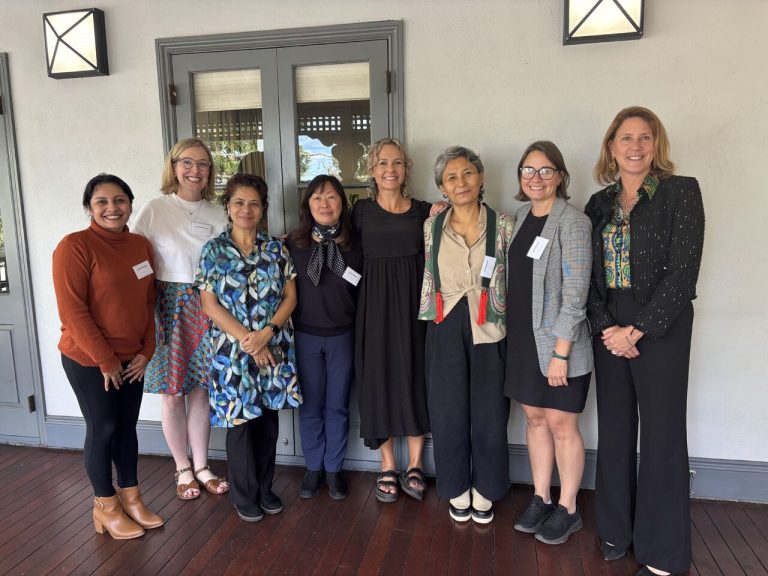
“The ICJ ruling will be historic for Rohingya survivors and their families around the world,” said Yanghee Lee, member of SAC-M. “The international community failed to prevent Myanmar military atrocities against the Rohingya nine years ago. It must seize this opportunity to finally secure justice for the Rohingya and begin to reckon with these failings.”
The paper explains what the ICJ can and cannot order, and sets out five plausible outcomes, each carrying different legal, diplomatic, and operational consequences:
- A finding that Myanmar is directly responsible for committing genocide against the Rohingya.
- A finding of partial responsibility, including failures to prevent or punish genocide, failure to enact relevant legislation, or responsibility for incitement, complicity, conspiracy, or attempted genocide.
- A finding that Myanmar breached the Court’s January 2020 provisional measures order, even if genocide itself is not established.
- A mixed or divided judgment, with no clear majority on key questions such as genocidal intent or attribution to the State.
- A dismissal on the merits, where the Court is not fully convinced that the evidentiary threshold has been met.
The paper is realistic about the Court’s likely caution, and about its restraint on remedies in Bosnia v. Serbia. Yet states must be ready to translate even a cautious judgment into action. A positive or partially positive finding would engage duties for states beyond Myanmar: not to recognise as lawful the situation created by the breach, not to aid or assist in maintaining it, and to cooperate to bring it to an end. These duties bear directly on arms transfers, jet fuel supply, banking links, military-linked revenues, diplomatic engagement, and forced or premature repatriation. A finding of genocide would also become an authoritative reference point for universal jurisdiction proceedings in national courts, shrinking the world for Myanmar officials implicated in atrocity crimes.
The roadmap sets out what preparation should look like for each actor. Supportive states should pre-position Security Council, General Assembly, and Human Rights Council action, activate coordinated sanctions, establish a victims’ trust fund and a Register of Damages, and sustain parallel accountability tracks. ASEAN should refrain from forced returns, coordinate maritime protection, expand regular pathways for Rohingya, and deny the junta the legitimacy it seeks from the regional bloc.
“The ICJ judgment could become one of the most significant international legal decisions on genocide in recent history. But it cannot be the end of the accountability process”, Antonia Mulvey, Executive Director of LAW, said. “States must be ready to enforce the judgment, support Rohingya communities, strengthen pressure on those responsible, and pursue every available avenue for justice.”
Bangladesh bears the heaviest burden of the crisis Myanmar’s conduct has created, and has done so for years with diminishing international support. A positive or partially positive finding would place it in a considerably stronger position to insist that Myanmar create the conditions for return. The paper recommends that repatriation be anchored in compliance with the Court’s findings, on the principle of safe, voluntary and dignified return, and measured against independently verifiable benchmarks: restoration of citizenship, freedom of movement, family unity, access to livelihoods, action against hate speech, and effective international monitoring. The obligation to meet those benchmarks rests with Myanmar.
The paper also plans for a negative outcome. A finding that genocide has not been legally established must not be treated as vindication of Myanmar. It would not erase the crimes committed against the Rohingya, nor remove the legal basis for sanctions, arms restrictions, support to the ICC, universal jurisdiction proceedings, or continued political pressure. Supportive states must have their messaging ready in advance, and donors must sustain the survivor-led and legal information networks that will explain the judgment to Rohingya communities, so that disappointment does not become abandonment.
Courts can recognise violations, impose obligations, and clarify the law. Implementation depends on states, regional organisations, donors, civil society, and the Rohingya community itself.
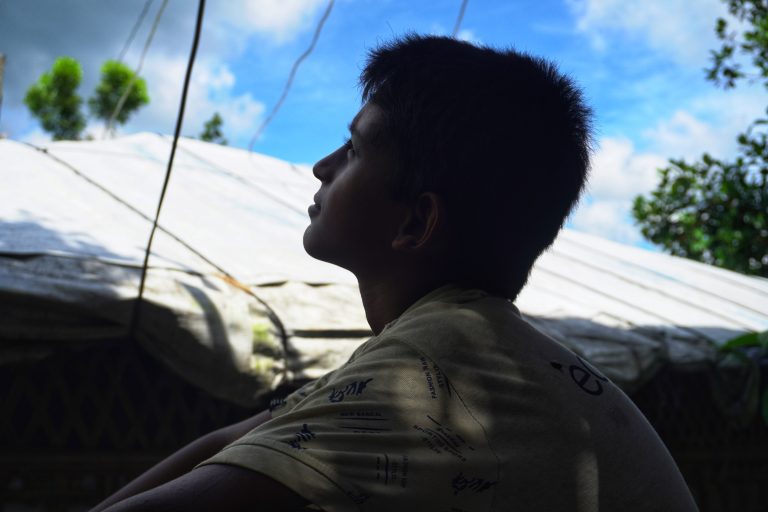
“The sexual violence and persecutions we suffered at the hands of the Myanmar military were unbearable”, said Salma*, a mother who was part of the Rohingya victims’ delegation wo attended the full merits hearings in the Hague in January. “We want justice, for us and to improve the lives of the next generation. We don’t want anyone else to suffer what we suffered.”
This is the moment to move from solidarity to preparation, and from preparation to action.
The position paper was co-authored by LAW and SAC-M and funded by the European Union and Canada. Its contents are the sole responsibility of the authors and do not necessarily reflect the views of the European Union or Canada.